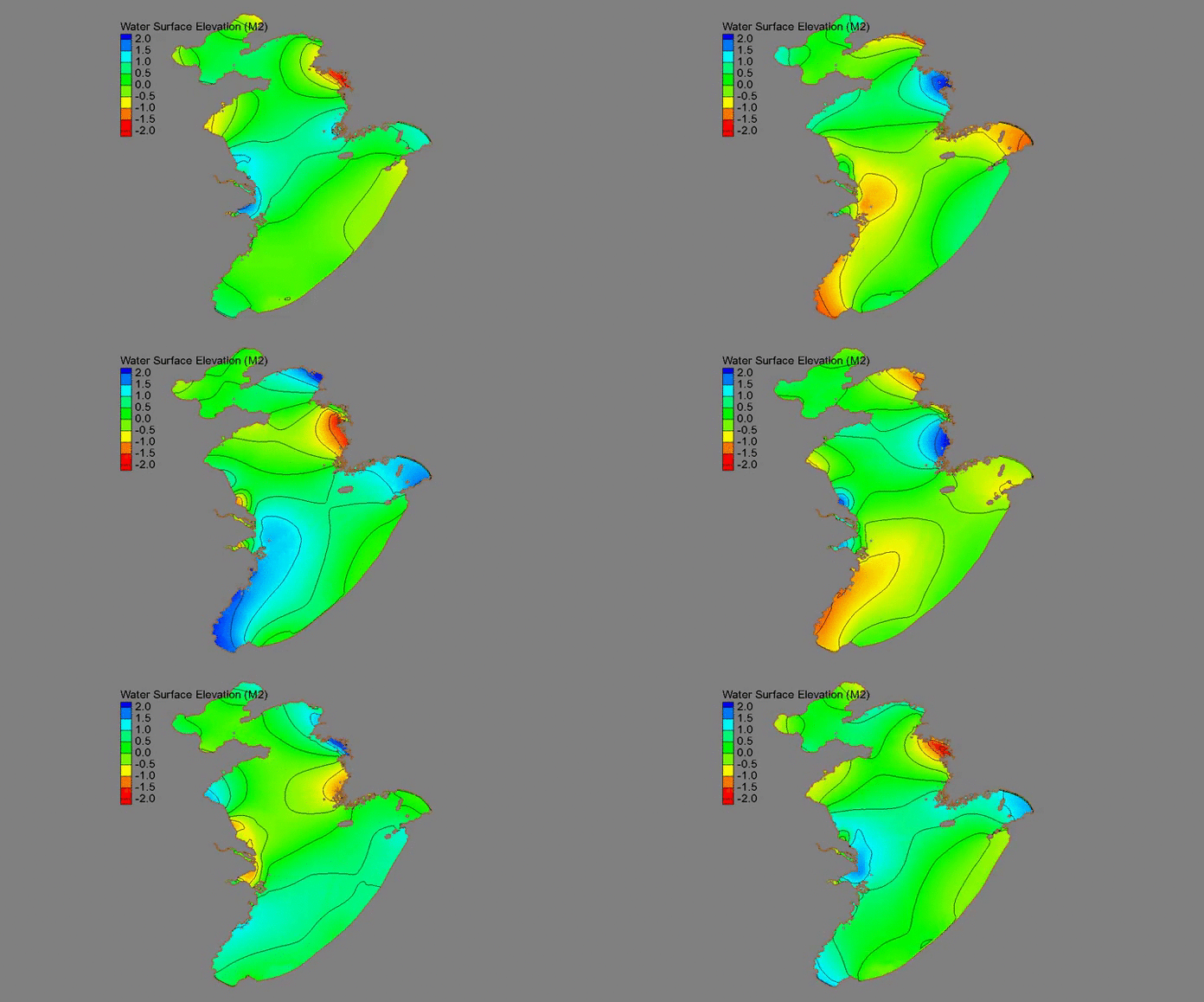
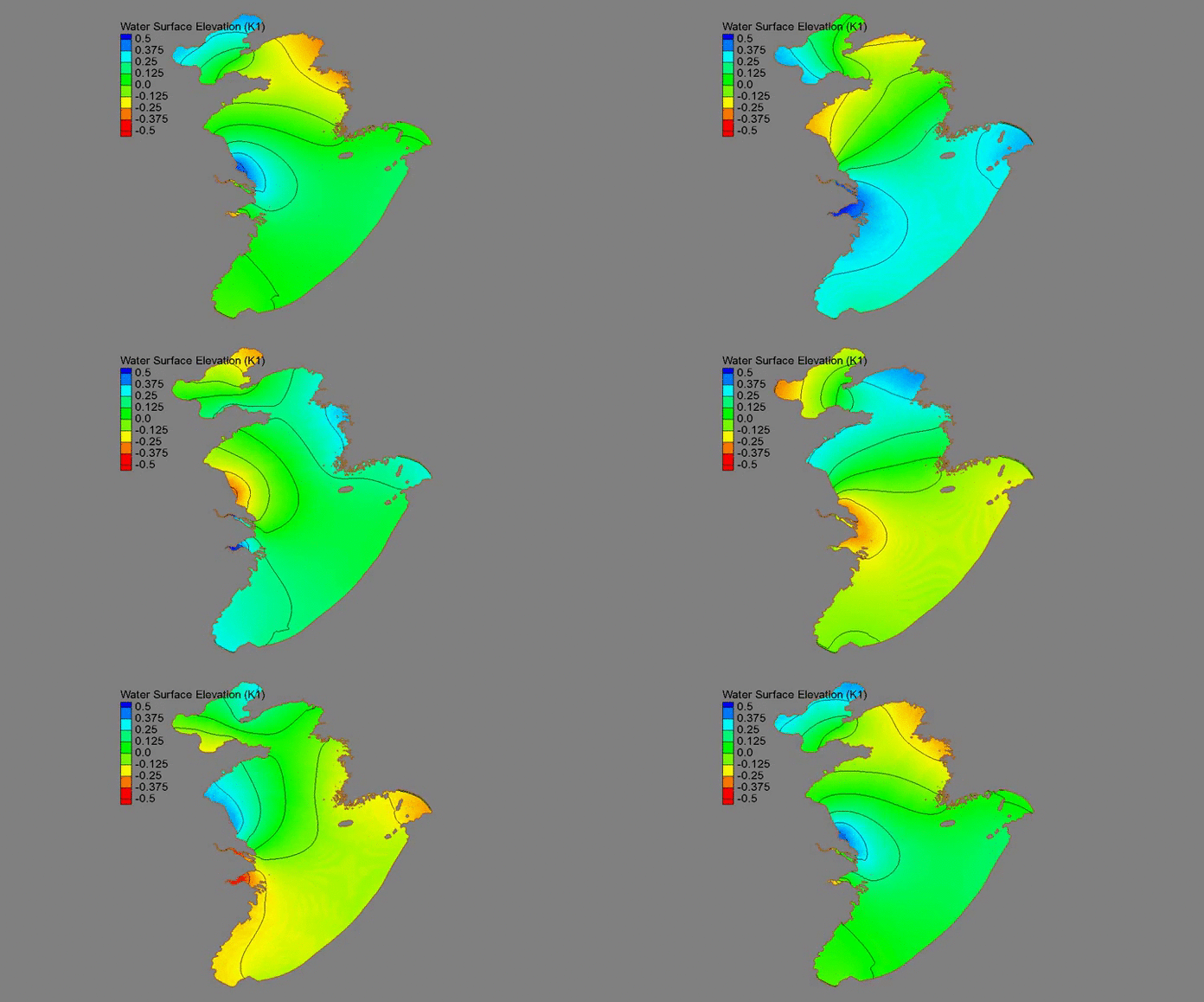
| Western Ocean of the Korean Peninsula |
 |
 |
 |
|
| Current Around SW-Coast by M2 Tide |

|
Day: March 14, 2017
Numerical Modeling for Stratified Flows, Internal Waves and Mixing Processes in Great Lakes, Estuaries and Oceans
Internal waves (IWs) in stratified flows propagate along the interface separating waters, usually where a layer of warmer water lies over a layer of colder water (although differences in salinity may also give rise to the density difference). In thermally stratified waters the thermocline, where the temperature changes rapidly with depth, separates warmer surface waters from the colder deeper water. IWs represent an important mechanism for mixing surface and deeper water, and for the transport of organisms, sediments and pollutants. The mixing and the vertical displacement of the thermocline associated with IWs play an important role in the stratified flows in lakes, estuaries and oceans. Given the need to understand the processes of IW generation, propagation, and interaction with boundaries, we have carried out some three-dimensional numerical simulations to understand the mechanism of these processes for Lake Erie and St. Lawrence Estuary in Canada.
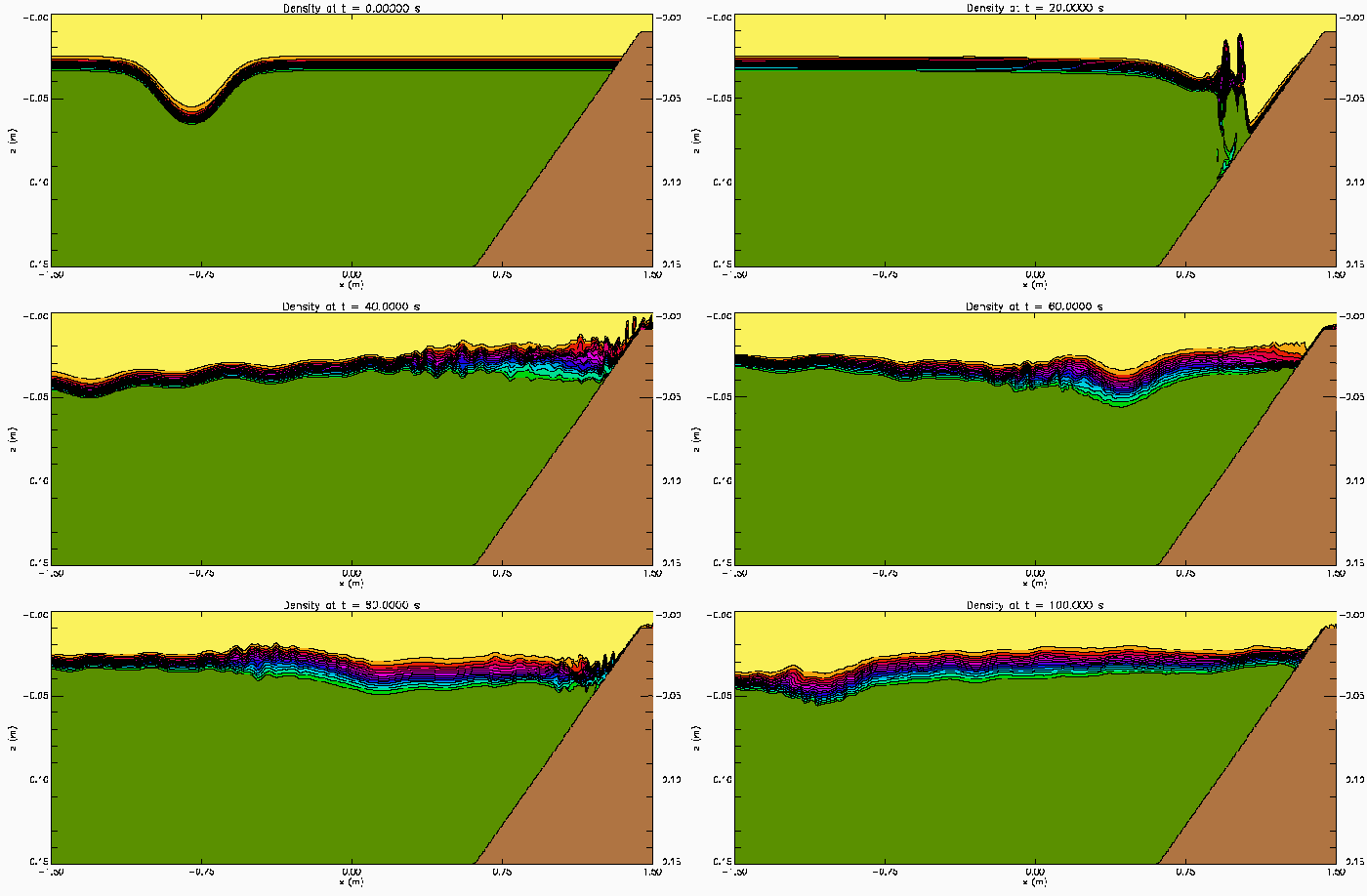 |
| Internal Waves Interacting and Shoaling on a Slope |
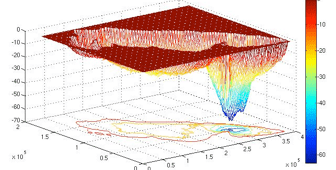 |
| Bathymetry of Lake Erie (Great Lakes in Canada) |
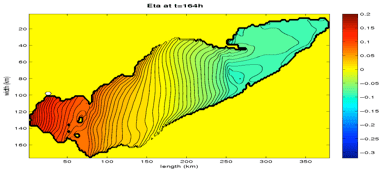 |
| Free Surface Elevation |
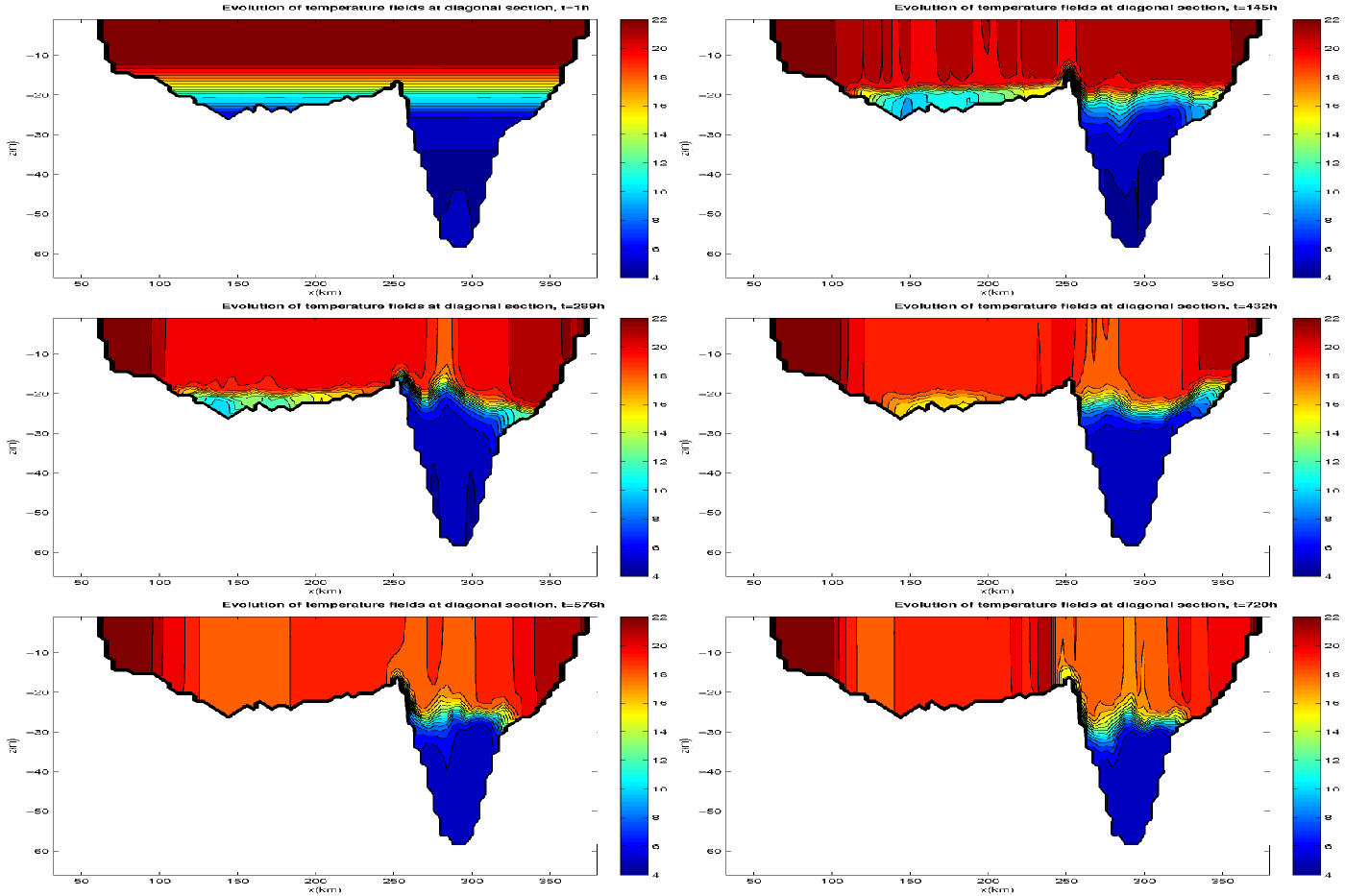 |
| Internal Waves |
3D Numerical Simulation of Turbulent Flow in Open Channels & Rivers
The flow in rivers, the flow over man-made hydraulic structures such as spillways, weirs, sluices, fluvial works, etc. are very complicated, because they are not only turbulent and highly three-dimensional, but also have irregular boundaries of a natural river bed and complex manmade structures and free surfaces. Among the important physical phenomena characterizing these flows are the generation of secondary currents, flow separation, reattachment and interaction of the flow with movable river boundaries and hydraulic structures. For such flows it is very difficult to accurately calculate the free surface positions, secondary currents and turbulent structures. The secondary currents and turbulent flows play an important role in nautical problems, sediment transports, bed and bank erosions. Thus the ability to accurately predict the three-dimensional flow in rivers, the flow over hydraulic structures, the associated sediment transport and morphological changes is crucial in the practice of hydraulic and river engineering.
1. Turbulent Flows over Hydraulic Structures
1.1 Flow over Weirs
1. Turbulent Flows over Hydraulic Structure
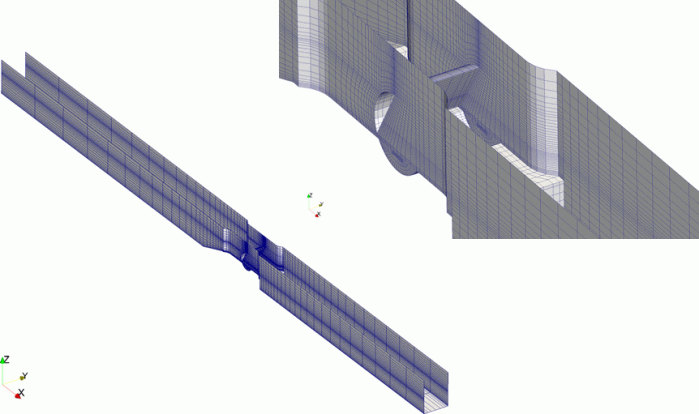
| Application: Gangjeong Weir in Nakdong River |
 |
 |
 |
| Turbulent Flow over Kostheim Weir in Main River |
 |
| Turbulent Flow over Lisdorf Flood Gate in Main River |
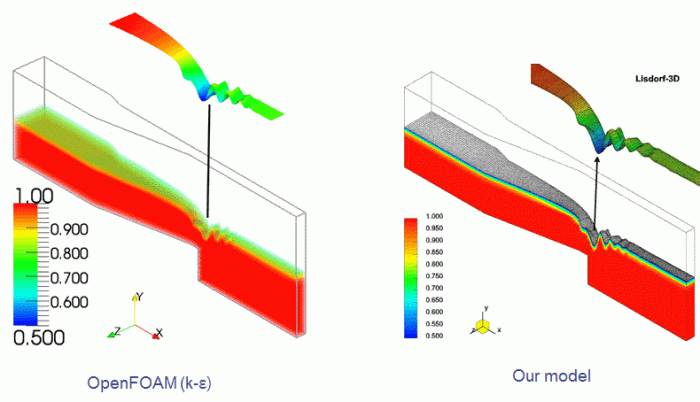 |
| Water Surface Evolution at Lisdorf Flood Gate |

RANS Model |
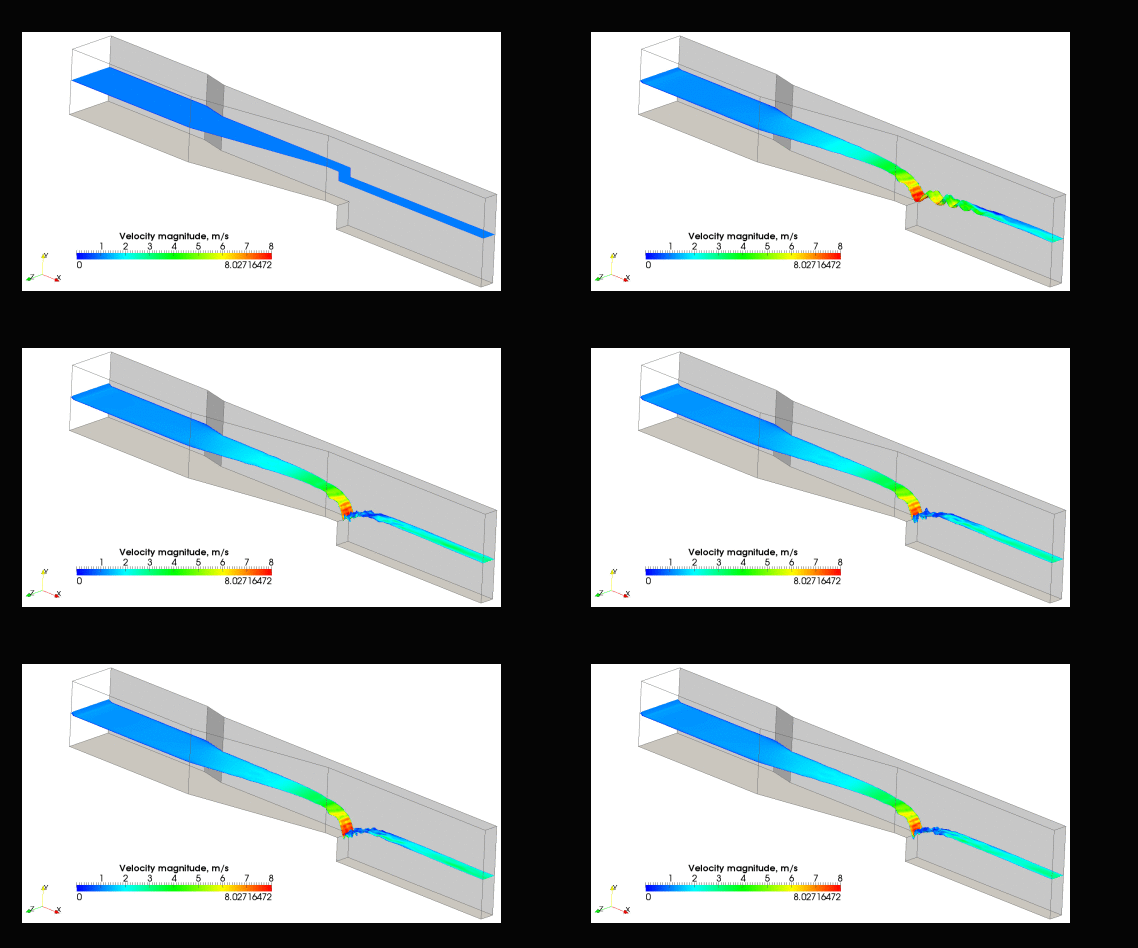
LES Model |
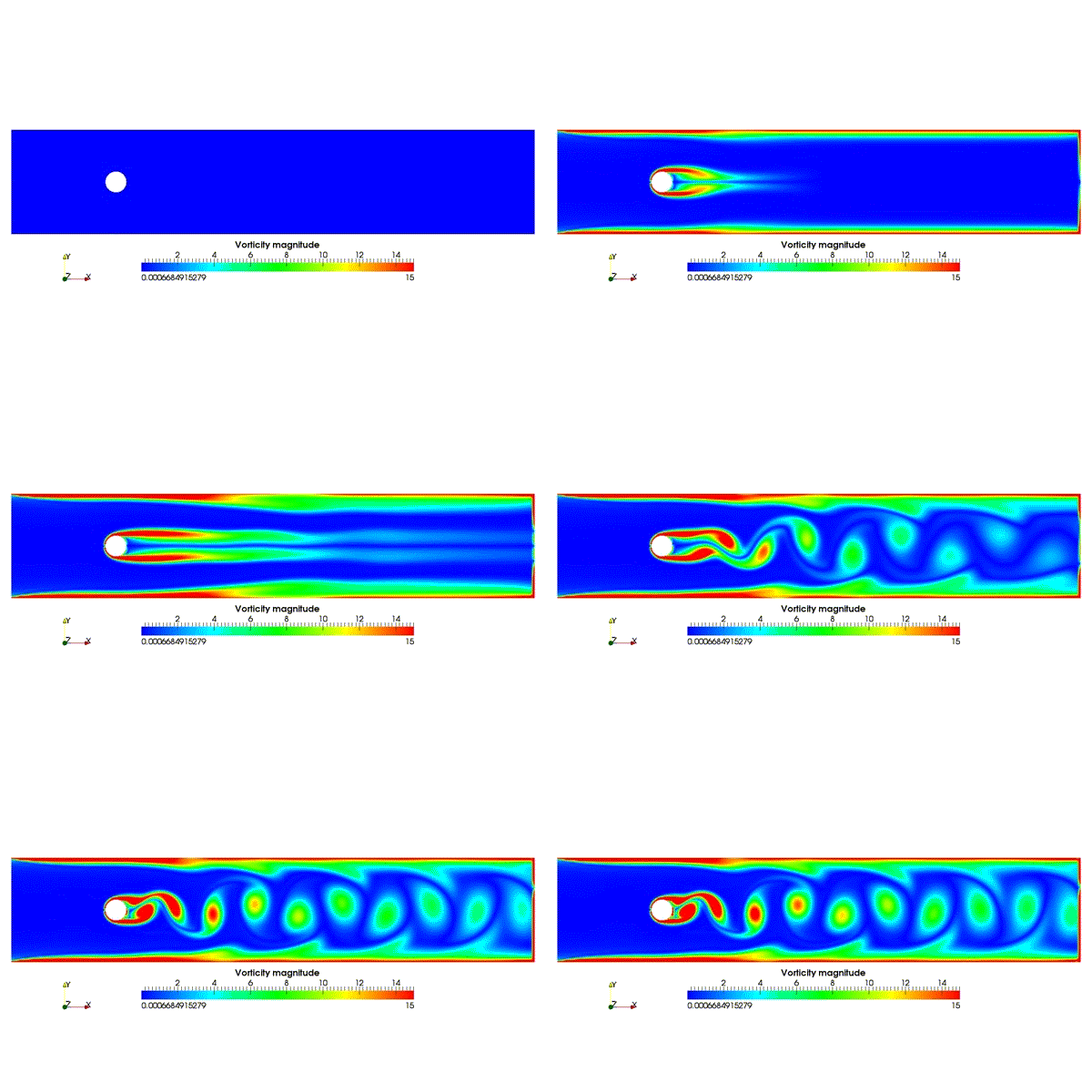
1.2 Flow Around a Pier
|
Vorticity: RNG k-ε (Top), Realizable k-ε (Middle), Bottom (LES) |


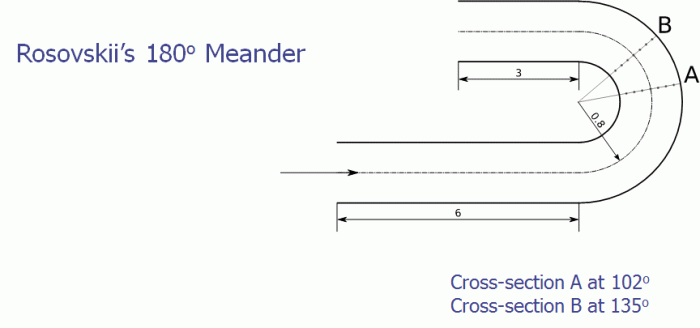
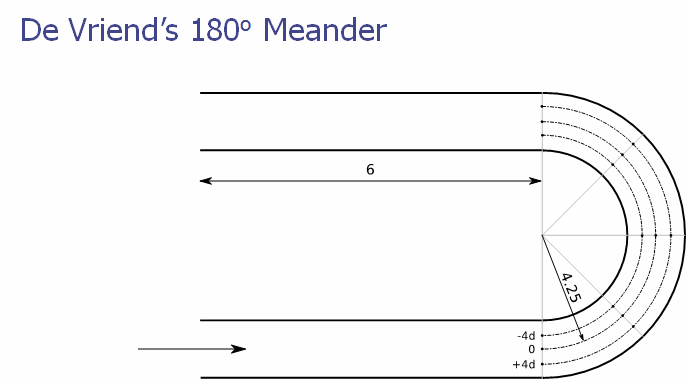
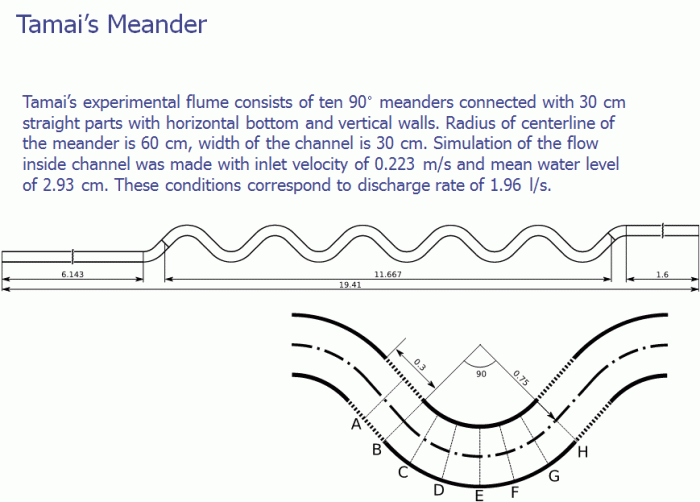
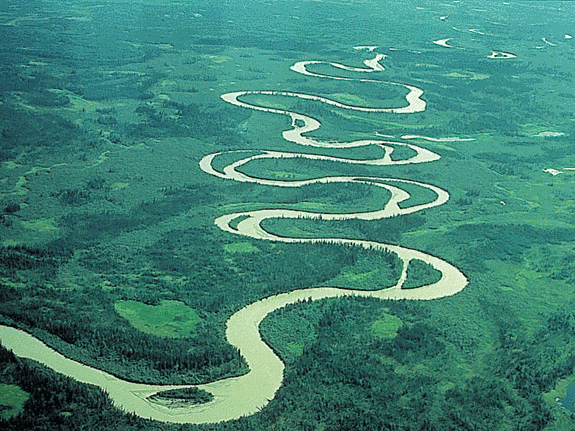
2. Turbulent Flows in Meandering Channels
|
|
 |
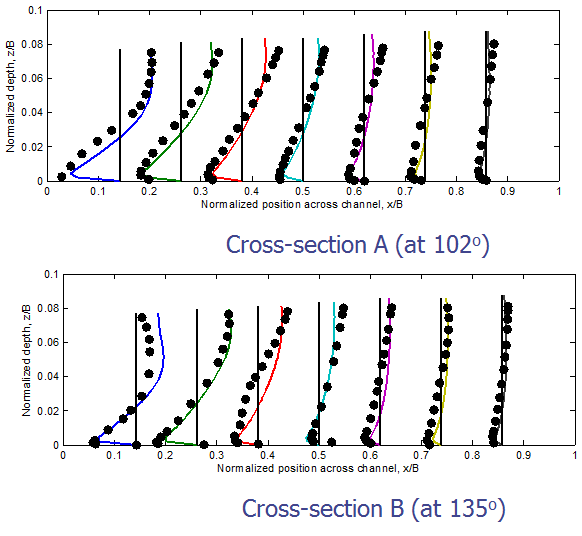
| Secondary Flows |
 |
 |
 |
 |
 |
 |
 |
 |
 |
 |
 |
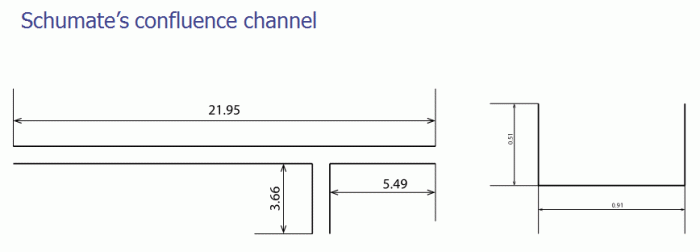
3. Turbulent Flows at Confluence of Channels
 |
 |
 |
Multiphase Flows and Transports in Porous Media: Groundwater Modeling
Multiphase flow and transport of compositionally complex fluids in geologic media is of importance in a number of environmental problems, such as in petroleum reservoir engineering, some of hydrocarbons and other organic chemicals often leaking into the soils and groundwater supplies; many potential groundwater contaminants are introduced at or near the soil surface via atmospheric deposition, spills, leakage from underground tanks, subsurface waste disposal, etc.
Soil Vapor Extraction Modeling
  |
| Non-aqueous phase liquid (NAPL) saturation Sn changed over time |
  |
| Concentration of contamination C changed over time |
 Environmental Fluid Dynamics Laboratory